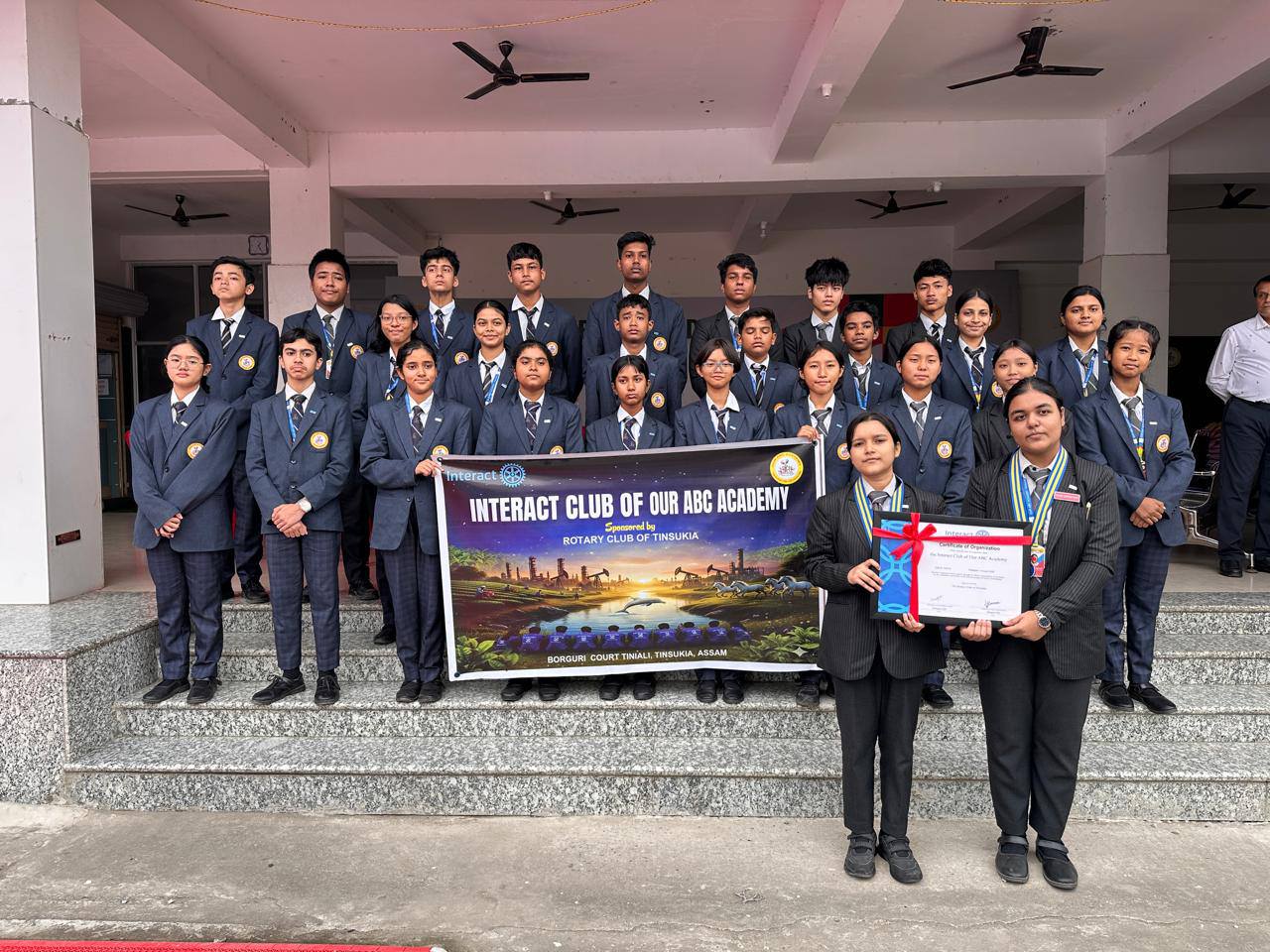
An unhurried programme,
fourteen years long.
We teach the CBSE curriculum, but we are not in a hurry. The point of the school year is not to finish the textbook; it is to learn what the textbook is actually about.
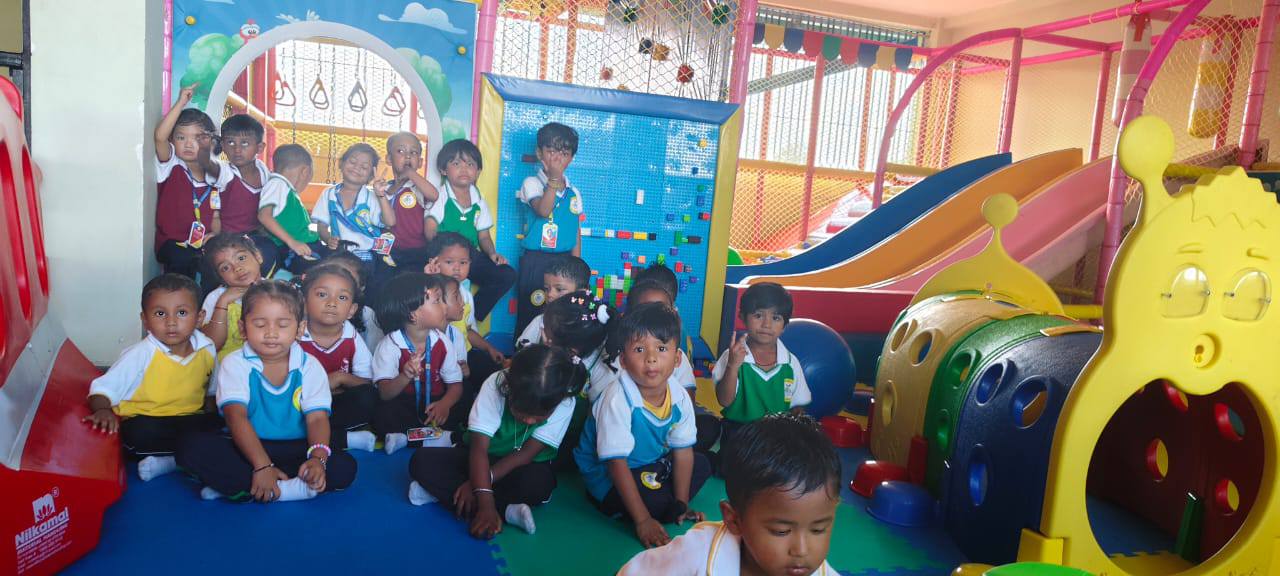
We protect the slowness of early childhood. Children learn to read at the pace at which they are ready to read.
The foundational years are organised around the simple proposition that young children learn by doing and by being read to — not by sitting still in front of a worksheet. Mornings begin with a circle, a story, a song, and a thirty-minute outdoor block.
Phonemic awareness is built through Jolly Phonics and supported by an English-rich classroom. Number sense is built through concrete materials — beads, blocks, the seasonal calendar — well before any formal symbol work.
We send children home tired in the legs and the imagination, not the hands. There are no formal examinations until Class III; progress is reported as a written narrative twice a year and discussed with parents in person.
By the end of Class II, a child should read independently for pleasure, write a paragraph about an experience, count to a hundred with full understanding of place, and be able to lose a game without losing composure.
The transition from play to discipline. Subjects acquire their own faces; the day acquires its own grammar.
The preparatory years introduce structured subject teaching without losing the warmth of the foundational classroom. Reading comprehension and written composition step into the foreground; the multiplication tables are learned by Class III, with understanding.
Hindi script begins in Class III; Assamese as a third language is introduced in Class IV. EVS broadens into the social and natural worlds, with one field visit per term — a wetland, a tea estate, a working press, the bus depot.
Library is a timetabled period. Each child keeps a reading log. Co-curriculars — chess, choir, an art studio — are folded into the school day rather than treated as add-ons.
The years when habit is laid down. We teach how to revise, not how to cram.
The middle and secondary years are the intellectually formative ones, and we treat them that way. Disciplinary writing — the lab report, the essay, the proof — is taught explicitly in every subject. Marking is detailed; the focus is improvement, not rank.
From Class VI, every science subject has at least one fortnightly lab period; mathematics has a weekly problem-solving session beyond the textbook. Computer science as an elective from Class VII.
The Class X year is structured into four terms. Mock examinations are held on the board pattern in October and December. Saturday remedial sessions are available — and personally insisted upon — for students who need them.
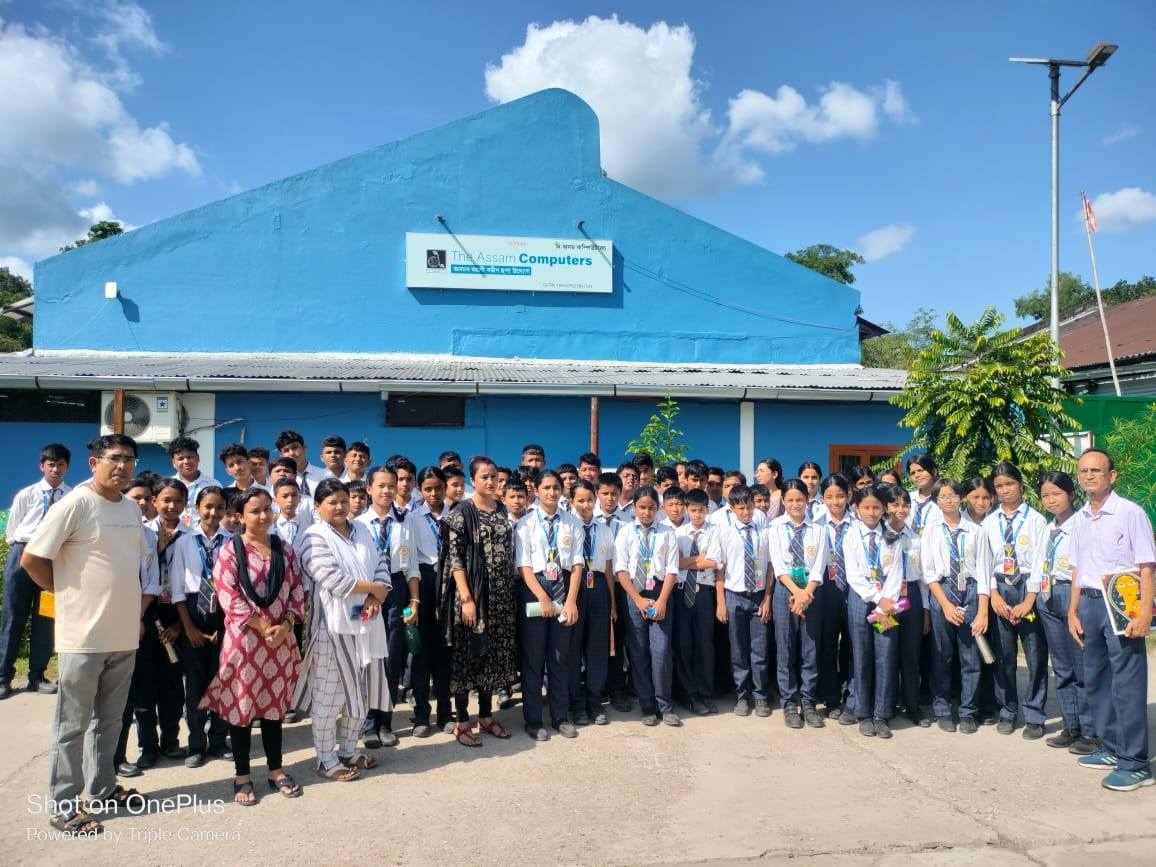
A two-year programme. Disciplined. Specific. Aimed at outcomes that matter beyond the board.
The Senior Secondary Hub treats Class XI and XII as a continuous two-year programme towards the CBSE board and the entrance examinations beyond. Three streams are offered, with one optional elective each.
Coaching for JEE, NEET, CUET and CLAT is threaded through the regular timetable in dedicated periods — it does not displace the school day or the activities programme. We do not believe the choice is between school and entrance prep.
Each student has a tutor who reads with them weekly across the two years, tracking subject scores, application progress, and well-being. Final-year tutors are senior subject teachers, not external counsellors.
Six principles, applied every weekday.
Reading is the master skill.
Every year of every wing has timetabled silent reading. We track minutes read; we publish reading lists. A child who reads well will, eventually, learn most other things.
Mathematics by construction.
We teach mathematics as a built object — visible, manipulable, justifiable. Memorisation is the end product of understanding, not its substitute.
Writing is taught, not assigned.
Disciplinary writing — the essay, the lab report, the proof — is taught in every subject, with model paragraphs, structured drafts, and weekly feedback.
Labs are not demonstrations.
Students do the experiments themselves, with bench partners, with consequences. A working pH meter beats a video of one.
Assessment is for learning.
We assess often, in small doses, with comments. Term examinations remain, but they are the audit — not the lesson.
The school day ends at school.
Homework is meaningful, finite, and finishable. We hold ourselves to a published cap: 1 hour for middle, 2 hours for senior. The rest of the evening belongs to the family.
The work shows up on the boards.
A decade of consistent results, with clear reporting. Read the most recent board results in full, with cohort-level context.